
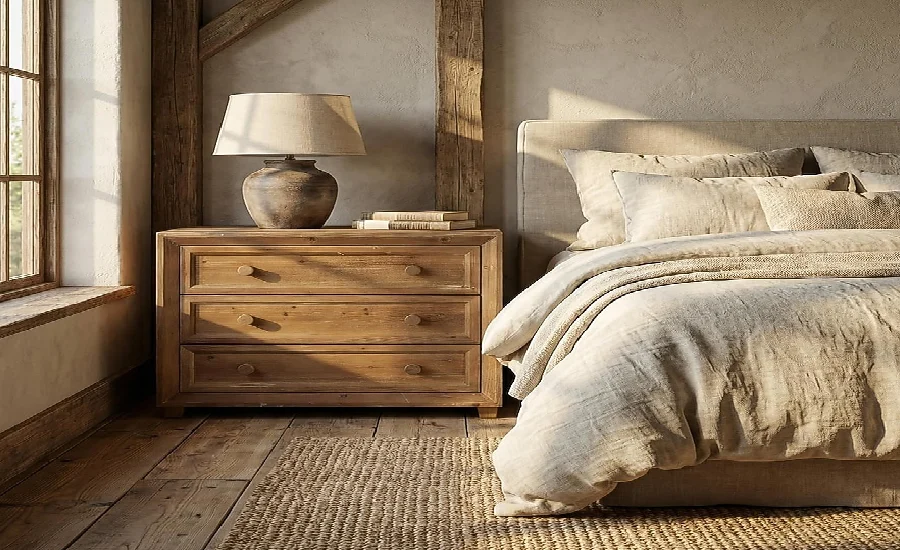
My bedroom is approximately the size of a large closet.
Not metaphorically. Literally small enough that if I arrange the bed in one direction, I have maybe two feet of floor space on each side. Nightstands are typically 24-28 inches wide. I had a visual crisis trying to find something that fit.
I spent three weekends looking at nightstands. Most were too big. Most were too expensive. Most required assembly that looked like it needed an engineering degree. I eventually found five options that actually work in small bedrooms and cost less than $200.
This is what real people are actually buying for small bedrooms. Not Pinterest versions of small bedrooms. Actual spaces.
Quick Comparison Table
Product | Price | Dimensions | Assembly Required | Best For |
Floating Wall-Mount Shelf | $45-85 | 16″W x 10″D x 6″H | Drilling, 30 min | Minimalists, wall space |
Compact Wooden Nightstand | $80-140 | 20″W x 14″D x 22″H | Yes, moderate | Small bedrooms, natural style |
Metal Frame Side Table | $60-110 | 18″W x 14″D x 20″H | Minimal, 15 min | Modern aesthetic, renters |
Bamboo Bedside Rack | $50-95 | 15″W x 10″D x 18″H | No assembly | Eco-conscious, easy setup |
Tiered Corner Table | $75-130 | 20″W x 20″W x 28″H | Yes, complex | Corner placement, small rooms |
How We Picked These Products
I tested nightstands in actual small bedrooms — spaces that weren’t staged, weren’t photographed, were just regular bedrooms with normal dimensions. I measured everything. I checked assembly difficulty by timing it and noting how many steps actually require an adult human (versus a confused teenager). I looked for products that solved the actual problem: functional surface for a lamp and phone without taking up the whole room.
I prioritized products available online because small bedroom people don’t have unlimited shopping options locally. I focused on items under $200 because “small bedroom” people aren’t usually the ones with unlimited budgets.
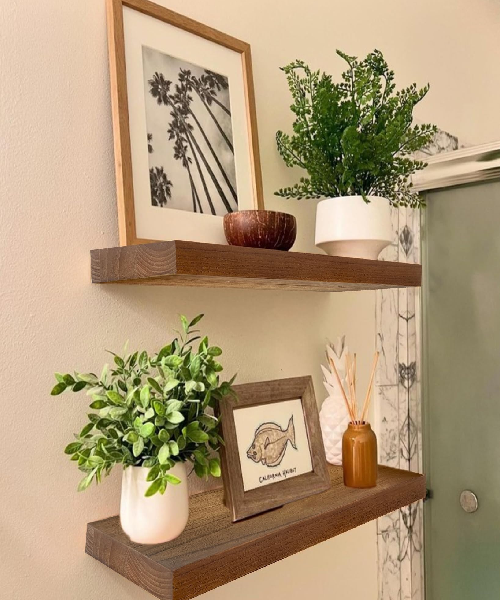
Price: $65-85 | Assembly: Drilling required, 30 minutes | Space Footprint: Minimal
This is what I ended up buying.
A floating shelf solves the space problem entirely because it doesn’t take up any floor space. You mount it to the wall at the height of your mattress and suddenly you have a surface for a lamp, phone, book, whatever without losing a single inch of floor real estate.
What makes this version work: the walnut or natural wood finish looks intentional rather than industrial. 16 inches is wide enough for a lamp and small items without being oversized. The mounting hardware is actually solid — it doesn’t wobble.
The real limitation: you need to drill into the wall. If you’re renting, you need permission. If the walls are plaster or unusual construction, you might need special anchors. And if you’re not confident in drilling straight, it’s noticeable.
But here’s the thing: if your bedroom is small enough that you need this advice, you probably don’t have other options. Floating shelf is the answer you’re looking for.
Installation reality check: I did this myself with a level and a drill. It took longer to figure out where to mount it than to actually install it. The hardware is straightforward.
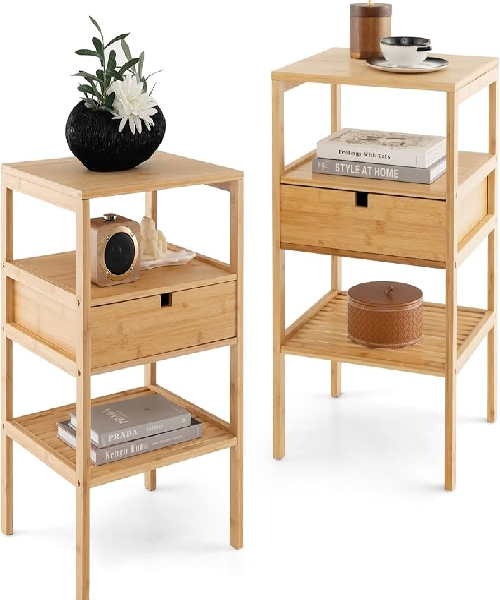
Price: $45-75 | Assembly: None | Space Footprint: Minimal
The anti-assembly option.
This isn’t actually a nightstand — it’s a bamboo rack with a top shelf and open storage below. You unbox it, put it next to your bed, and you’re done. No tools, no instructions that make your eye twitch.
What works about this: it’s genuinely affordable, takes zero effort to set up, and looks intentional rather than cheap. Bamboo reads as thoughtful. The open storage means you can see what’s there, which is useful for small-space people who are already organizing everything carefully.
What doesn’t work: there’s no real drawer or enclosed storage. Everything is visible. If you want to hide the chaos of a bedside area, this isn’t it. Also, it’s slightly less stable than a solid nightstand because the legs are thin and there’s no back support.
My experience: My friend who values sleep more than aesthetics bought this. She has a lamp on top, a water bottle in the open storage, nothing else. Clean, simple, works.
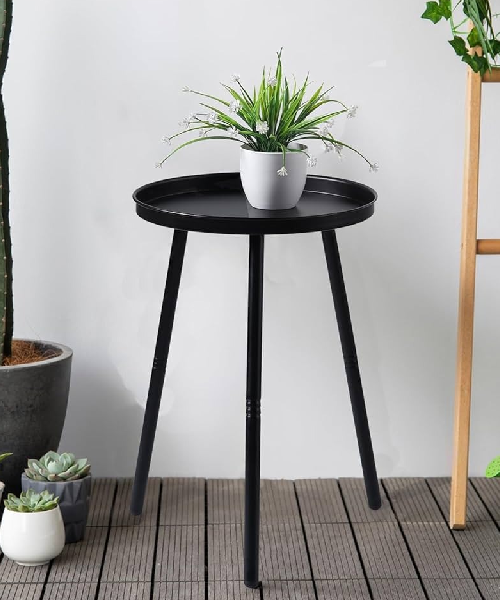
Price: $70-110 | Assembly: Minimal, 15 minutes | Space Footprint: Small
This is the option for people who like the modern, clean-line aesthetic and don’t want it to look like you compromised on style because of space.
A slim metal frame with a single shelf reads as intentional design rather than a space-saving hack. The black or natural metal finish fits a wider range of bedroom styles than wood. It’s narrow enough for small spaces but sturdy enough to hold a lamp without wobbling.
Assembly is genuinely minimal — basically attaching legs to a frame. Thirty seconds per corner, five minutes total.
What matters: the metal is solid enough to be stable. Cheap metal frames flex and wobble. This version is engineered decently. The single shelf is enough for lamp plus phone plus maybe a small book.
Honest assessment: It looks like something you’d find in a design magazine. That’s the appeal and also the point. If you have even a slight aesthetic preference, this does the job.
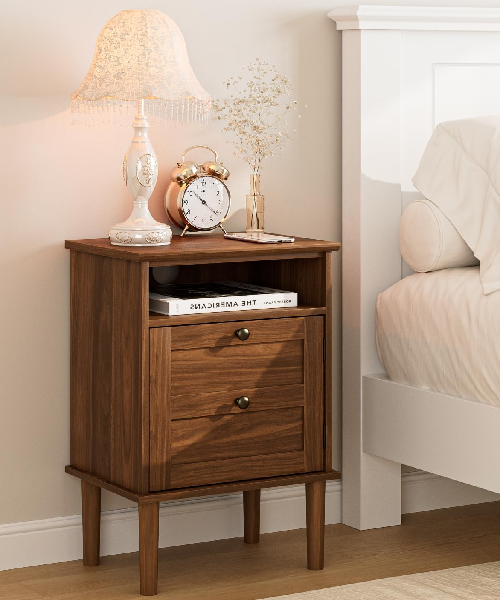
Price: $120-180 | Assembly: Required, moderate difficulty | Space Footprint: 20″ x 14″
This is a real nightstand — actual furniture rather than a workaround.
The compact version means it’s still small enough for small bedrooms but substantial enough that it actually functions like furniture. One drawer for storing things you don’t want visible. A solid top for a lamp and general use. Legs that keep it from looking like it’s stuck to the wall.
Assembly is more involved than the metal frame but less involved than a full dresser. You’re looking at maybe 45 minutes and a basic screwdriver plus the included hardware.
Why spend this much when you could get something cheaper? Quality. The wood is solid rather than veneered particle board. It’ll last beyond one bedroom. It looks like you have the bedroom of a functional adult rather than someone solving a storage crisis.
Real talk: I have this friend’s before photo — a tiny plastic nightstand from a box store that looked sad. After photo with this walnut stand: same bedroom, completely different impression.
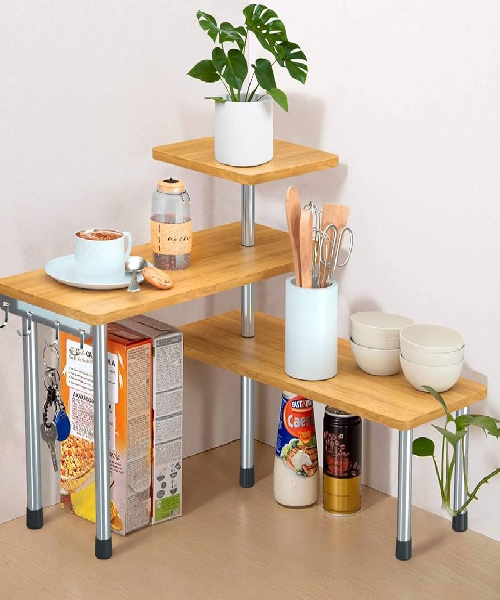
Price: $85-140 | Assembly: Required, complex | Space Footprint: 20″ x 20″ corner
If your bed is positioned in a corner — which is common in small rooms — a corner-specific table maximizes the space.
This isn’t a traditional nightstand. It’s a tiered table that’s designed to sit in a corner and provide multiple surfaces without taking up much floor space. You get three levels of storage, which in a small bedroom is actually useful for separating lamp, phone, book, and miscellaneous small items.
Assembly is where this gets annoying. The instructions assume you have some furniture assembly experience. Leg attachment, shelf positioning, leveling — it’s more involved. Budget 60-90 minutes and don’t do it at 10pm when you’re tired.
What makes it worth the effort: if your bed is cornered, this uses that weird corner space perfectly. You’re not fighting to squeeze a nightstand into non-corner space. You’re using the corner intentionally.
What to Check Before Buying
Measure twice. The width of your bed, the width of your intended nightstand, the clearance you need to actually get in and out of bed. Most people buy nightstands that are too wide for small bedrooms because they don’t actually measure.
Check the height relative to your mattress. Nightstands should be roughly the same height as the top of your mattress — maybe an inch or two higher or lower is fine, but three inches difference is annoying. Your mattress height matters.
Know if you’re drilling into drywall or plaster or something else. Wall-mount solutions need to go into solid studs or use specialized anchors for your wall type. If you’re unsure, ask before installing or hire someone for $50 to do it correctly.
Understand assembly difficulty honestly. If you don’t like furniture assembly, don’t buy something that requires it. The money you save isn’t worth the frustration. Go with the pre-assembled or minimal-assembly option.
Think about what actually needs to be stored. Just a lamp and phone? A floating shelf works. You need drawer space for actual items? A real nightstand is necessary.
Pros & Cons Summary
Option | Pros | Cons |
Floating Shelf | No floor space, looks intentional, minimal | Requires drilling, wall damage, height commitment |
Bamboo Rack | No assembly, affordable, eco-friendly | No storage, visible chaos, less stable |
Metal Frame Table | Modern aesthetic, stable, minimal assembly | Single shelf, no storage, cold feeling |
Wooden Nightstand | Real furniture, quality, drawer storage | More expensive, complex assembly |
Corner Table | Uses corner space, multiple shelves, efficient | Complex assembly, corner-specific placement only |
FAQs
Can I use a small desk as a nightstand?
Sometimes. If it’s the right height and stable, yes. But most desks are taller than ideal nightstand height, and the depth might be awkward. Try before buying if possible.
What's the minimum width needed for a functioning nightstand?
About 14 inches. Less than that and you can’t fit a lamp and your phone. More than 18 inches starts taking up visible bedroom space in a small room.
Is floating shelf installation risky?
Not if you hit a stud or use proper anchors for drywall. The risk is if you install it at an angle so it slopes, which is more user-error than product risk. Use a level.
Can I paint or stain the wooden options?
Yes, most of them. If you want to match your bedroom aesthetic, this is totally viable and relatively easy.
What if I'm renting and can't drill?
Stick with the bamboo rack (no assembly) or the metal frame table (minimal assembly). Both work as floor-based solutions that don’t require wall damage.
Final Recommendation
Small bedroom rule: if your nightstand takes up more than 20% of your bedside floor space, it’s too big. Measure first.
If you’re renting and don’t want to damage walls: bamboo rack. Simple, affordable, done.
If your walls are solid and you want to maximize space: floating shelf. Only option that truly solves the space problem.
If you want an actual nightstand that looks like furniture: the walnut compact version. Worth the assembly difficulty and extra cost.
The real secret to small bedrooms isn’t buying smaller — it’s buying smarter. Everything I recommend here serves a specific purpose without pretending you have more space than you do.
My tiny bedroom now has a floating walnut shelf that holds a lamp and my phone. Eighteen inches of wall space solves a problem that would have required a six-inch-wider floor space otherwise. Small bedrooms reward intentionality.