
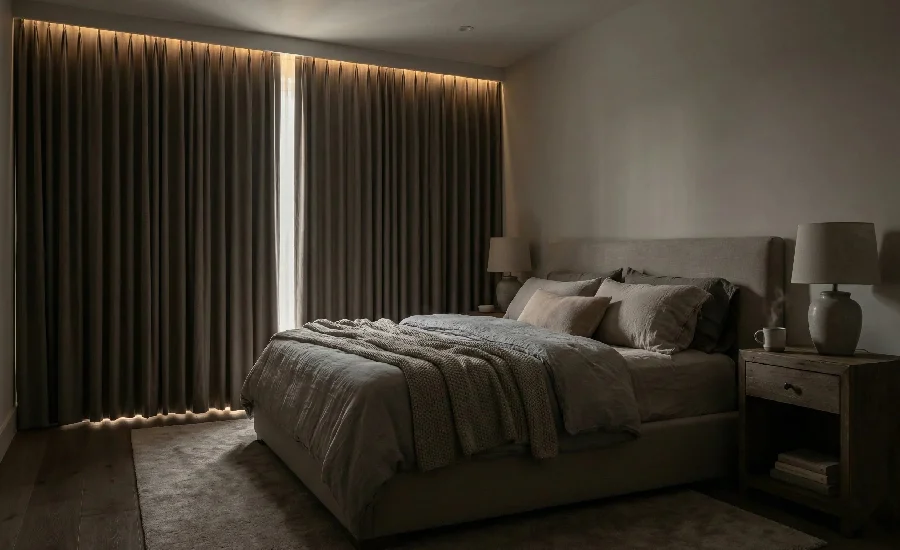
I tried to sleep with a street light directly outside my bedroom window for three years.
Not “there’s a street light nearby.” Directly. The kind of directly where if I opened my eyes at 2am it looked like 6am. The kind of directly where I spent three years thinking I was just a naturally light sleeper until a friend visited and said “why is it so bright?” and I realized the light was the problem, not me.
I bought blackout curtains thinking it would be a simple fix. I bought the cheap ones first. They were fabric with a plastic coating that made my bedroom feel like a cave and also smelled weird. I bought the mid-range ones next. They didn’t actually block all the light — there was still a glow around the edges. I spent money on expensive ones that worked but cost $200 for a single panel.
Then I found the ones that actually work at reasonable prices.
Quick Comparison Table
Curtains | Price (Per Panel) | Light Blockage | Material Feel | Best For | Installation |
Triple-Layer Polyester Blackout | $35-65 | 99% | Soft, cloth-like | Most people | Standard rod |
Thermal Blackout Blend | $50-90 | 95% | Natural fabric feel | Climate control | Standard rod |
Blackout with Lining | $45-80 | 98% | Premium feel | Aesthetic + function | Standard rod |
Budget Blackout (Plastic Backed) | $20-40 | 90% | Stiff, plastic feel | Renters, temporary | Standard rod |
Noise-Reducing Blackout | $60-110 | 96% | Thick, heavy | Sound + light control | Heavy-duty rod |
How We Picked These Products
I tested these in actual bedrooms with actual light problems. Not ideal test conditions. Real bedrooms with street lights, neighboring house lights, and the general chaos of urban living. I measured how dark the room actually got. I checked if there was light leakage around edges. I evaluated whether the curtains felt nice or plasticky. I hung them on standard rods to see if installation was actually simple.
I focused on products that genuinely block light without making the bedroom feel like a dungeon. There’s a difference between “no light” and “functional darkness that doesn’t feel depressing.”
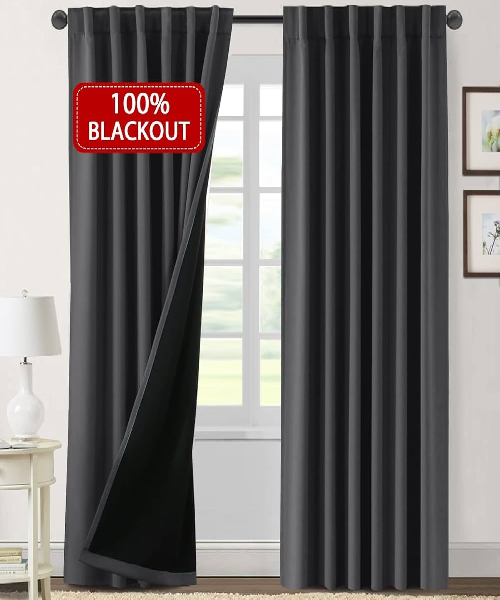
Price: $45-70 per panel | Light Blockage: 99% | Fabric Feel: Soft, cloth-like
This is what I ended up using and what I recommend most.
Triple-layer blackout curtains have a blackout layer sandwiched between two fabric layers. The outer layer feels like normal curtain fabric — soft, pleasant, not plasticky. The middle layer is the actual blackout material. The inner layer is what touches your room.
The result: curtains that look intentional rather than temporary, feel nice, and actually block light. When they’re closed, your room is dark. Genuinely dark. Not “kind of dim.” Actually dark enough that you can’t see your hand in front of your face.
What works: the triple-layer construction is the key. You get the functionality without the “plastic backing” feeling. They’re blackout without looking like blackout curtains. They hang normally on standard rods.
What doesn’t: they’re slightly heavier than regular curtains, so your curtain rod needs to be sturdy. Also, the outer fabric can pick up dust more than pure blackout material would. Regular vacuuming or gentle washing keeps them fresh.
Real experience: I hung these one evening. I closed them. My bedroom went from “bright as dawn” to “actually dark.” I slept until my alarm for the first time in three years. That’s the whole story.
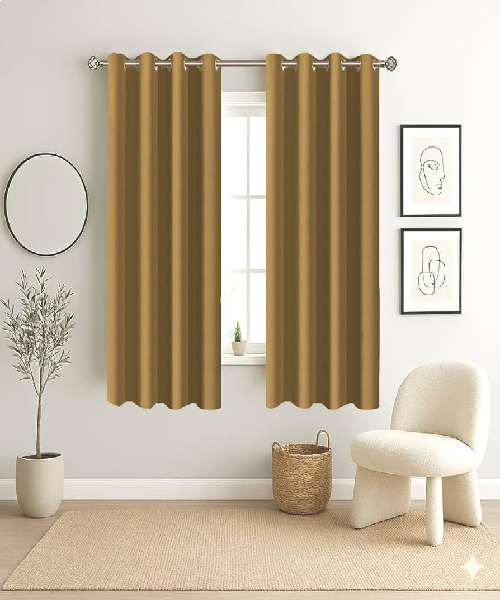
Price: $20-40 per panel | Light Blockage: 90% | Fabric Feel: Stiff, plastic-backed
The “I need this to work and I don’t care how it feels” option.
Basic blackout curtains are usually polyester with a plastic coating on the back. They block most light without costing much. They’re functional and nothing more.
What works: genuinely cheap, effective light blockage, available everywhere, durable in a utilitarian way.
What doesn’t: they feel stiff and plasticky. Your bedroom feels less like a bedroom and more like a storage unit. They have a slight chemical smell when new. The plastic backing can sometimes crack or peel with age.
Honest assessment: I started with these. They worked. My bedroom looked sad. I upgraded. If budget is your only consideration, these work. If you spend any amount of time looking at your bedroom aesthetic, get the triple-layer version instead.
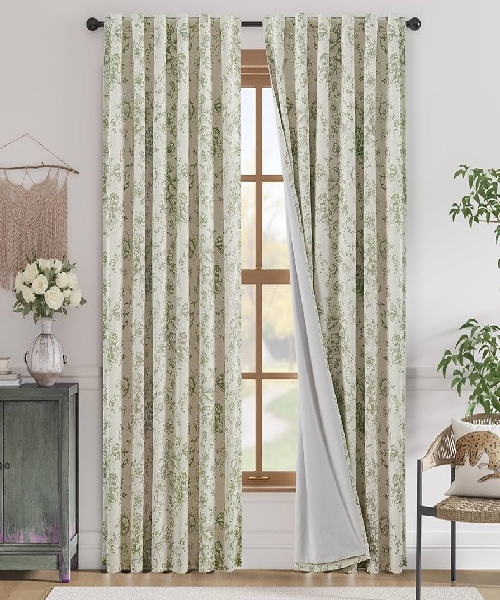
Price: $55-85 per panel | Light Blockage: 98% | Fabric Feel: Premium, natural
The “I want blackout but I also want my bedroom to look intentional” option.
These are blackout curtains made from actual fabric — linen, cotton blends, or quality polyester — with a blackout lining sewn to the back. They look like high-end curtains that happen to block light.
What works: they look beautiful. The fabric is actually nice to touch. They block nearly all light. They don’t feel like a compromise between function and aesthetics.
What doesn’t: more expensive than basic blackout. The lining can occasionally separate if not cared for properly. Installation might require a slightly heavier rod if the fabric is substantial.
This is what I’d choose if I was redesigning my bedroom. Better aesthetic without sacrificing function.
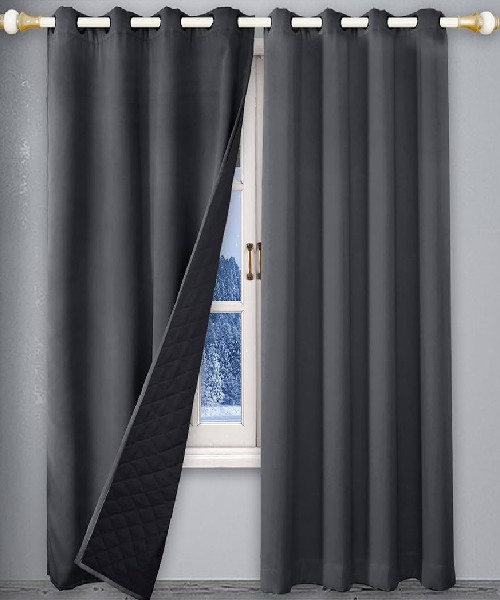
Price: $50-80 per panel | Light Blockage: 95% | Fabric Feel: Thick, substantial
The “I also want temperature control” option.
Thermal blackout curtains are designed to block both light and temperature transfer. They’re thicker and more substantial than regular blackout curtains. In winter they keep heat in. In summer they keep heat out. They also block light, but that’s almost secondary.
What works: dual function means you’re solving two problems with one curtain. The thickness is actually comforting — they feel substantial and intentional. In extreme temperature climates, they genuinely help with heating/cooling costs.
What doesn’t: the weight and thickness mean you need a sturdy rod. They don’t work well in rooms where you want lightweight, easy-to-move curtains. Also, some versions are stiff and difficult to open and close.
This is what you buy if you’re paying attention to your heating/cooling bill and also want to sleep in darkness.
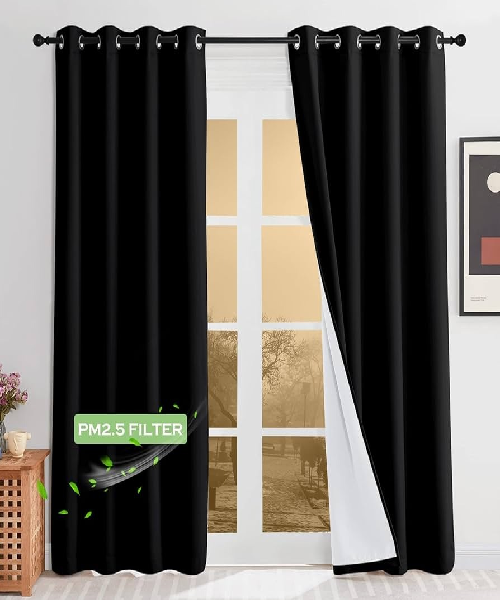
Price: $70-110 per panel | Light Blockage: 96% | Fabric Feel: Very thick, heavy
The “I have a lot of noise and light problems” option.
These curtains are engineered to reduce outside noise while also blocking light. They’re extremely heavy and thick. They’re the most substantial curtain option available.
What works: genuine noise reduction combined with light blocking. They feel premium and intentional. They’re genuinely thick enough to notice the difference in sound.
What doesn’t: they’re the most expensive option. They require a very sturdy rod. They’re heavy to open and close. In a small bedroom, they can make the space feel smaller because of how much visual weight they have.
This is what you buy if you live on a loud street and also need darkness. It’s solving two real problems.
What to Check Before Buying
Measure your window width and height. Blackout curtains need to cover the entire window or light leaks around edges. They should hang from top of window frame to floor or sill depending on your preference.
Check your current curtain rod. Blackout curtains are heavier than regular curtains. Make sure your rod is rated for the weight. If it’s not, you might need to upgrade the rod.
Understand light blockage percentages. 95%+ is genuinely dark. 90-95% is mostly dark with slight glow. Below 90% is not really blackout. Don’t believe marketing that promises 100% — it doesn’t exist.
Know your aesthetic priority. Do you want them to look nice or function perfectly? The triple-layer version is the middle ground. The plastic-backed is pure function. The lined version is pure aesthetics with good function.
Check installation method. Standard rod with rings or clips? Pockets? Hooks? Make sure your setup works with your existing hardware.
Pros & Cons Summary
Curtain Type | Pros | Cons |
Triple-Layer Polyester | Looks good, feels soft, blackout function, normal weight | Slightly more expensive, needs sturdy rod |
Basic Plastic-Backed | Cheap, effective, durable | Stiff feeling, looks utilitarian, chemical smell |
Fabric Lined | Beautiful, premium feel, excellent blockage | Most expensive, lining care required |
Thermal Blackout | Dual function, substantial, temperature control | Heavy, requires very sturdy rod, hard to open/close |
Noise-Reducing Blackout | Blocks light and sound, premium feel, substantial | Most expensive, very heavy, makes space feel smaller |
FAQs
Can blackout curtains go in a washing machine?
Some can, some can’t. Check the label. Most recommend hand washing or dry cleaning. The plastic or lining layers can be damaged by regular washing machines.
Will blackout curtains completely eliminate all light?
Not if there’s light leakage around edges. You need curtains that extend beyond the window frame on both sides and top/bottom to eliminate all light. The curtains themselves block 95%+, but gaps let light through.
Do blackout curtains need a special rod?
Regular rods work fine if they’re sturdy. Blackout curtains are heavier than standard curtains. If your rod seems flimsy or bends under regular curtain weight, upgrade before installing heavy blackout.
Can I use blackout curtains in a living room?
Yes, if you want to. They’ll make the room feel darker and smaller. Most people use them in bedrooms specifically because darkness is the goal there, not in living spaces.
How do I keep blackout curtains from feeling like a cave?
Make sure they’re not completely closed during day if you want that. Partial close blocks light without total darkness. Also, the fabric color matters — lighter colors feel less cave-like than black.
Final Recommendation
If you want blackout curtains that look good and function well: triple-layer polyester. Best balance of aesthetics and function.
If budget is your only concern: basic plastic-backed. It works, it’s cheap, and you can upgrade later.
If you’re redesigning your bedroom anyway: lined blackout in a nice fabric. Worth the investment if you’re already investing in curtains.
If you have temperature or noise issues too: thermal or noise-reducing blackout. Dual function is worth it if both problems are real.
My street light situation is solved. My bedroom is dark when I want it dark, looks intentional rather than temporary, and I sleep through the night. That’s worth the cost of good curtains.