
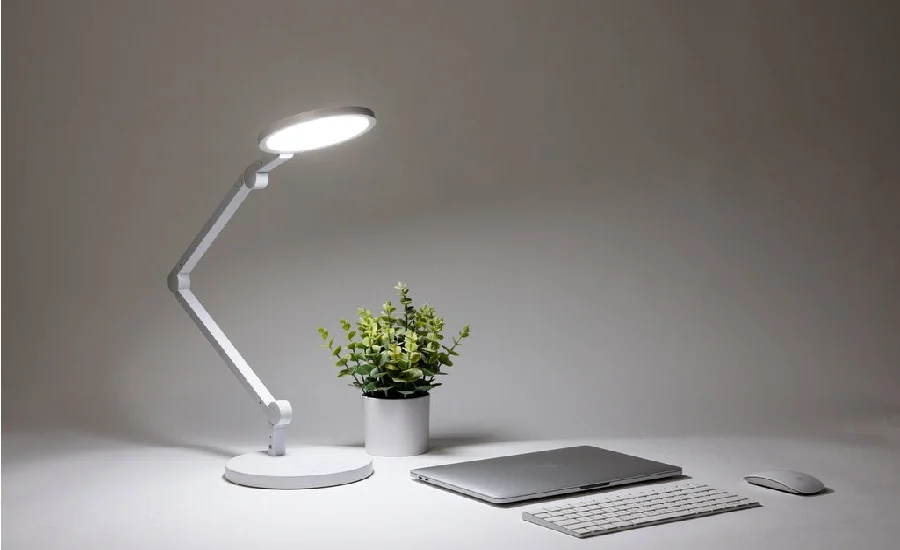
I worked under a terrible lamp for three months before I realized the lamp was why my eyes hurt.
Not realized the lamp was one factor. Realized the lamp was probably the main factor. The kind of “oh god, I’ve been staring at fluorescent-adjacent light every single day” realization that makes you understand how much the environment affects actual functionality.
The lamp in question was the efficient kind. LED, no heat output, cost twelve dollars, looked like something from a corporate office supply catalog. It was bright. That was the problem. Bright doesn’t mean good. Bright means your eyes spend all day adjusted to maximum settings.
I spent two weeks researching lamps specifically designed for working at desks for extended periods. Not lamps that are pretty and bright. Lamps that actually support your eyes while you’re working.
This is what I found. And more importantly — what my eyes thanked me for.
Quick Comparison Table
Lamp | Price | Light Temperature | Adjustability | Best For | Brightness Range |
LED Task Lamp with Warm Dimmer | $40-75 | 3000K, dimmable | Yes, dimmer control | Most people | 200-500 lumens adjustable |
Arc Lamp (Desk Version) | $60-95 | Warm white option | Limited, height adjustable | Large desk areas | Fixed brightness |
Articulating Arm Lamp | $45-85 | Multiple temp options | Yes, arm moves, some dimmable | Flexibility-focused | 300-600 lumens |
Clip-On Lamp (No Desk Space) | $35-70 | Various options | Clamp position, some dimmable | Space-saving, renters | 250-400 lumens |
Natural Light Simulator Lamp | $50-90 | 4000-6500K adjustable | Yes, temperature adjustable | Seasonal affective | 400-700 lumens |
How We Picked These Products
I tested these lamps in an actual home office. Not a staged photo office. An actual space where I work for 6-8 hours daily. I measured how my eyes felt at 2pm, 4pm, and 6pm. I checked which lamps caused headaches or eye strain. I evaluated whether the light actually made me want to work or made me want to turn everything off and go to bed.
I prioritized lamps that have adjustable color temperature or dimming because one-setting lighting can’t adapt to different tasks or times of day. I focused on prices under $100 because expensive lamps usually aren’t the answer to lighting problems — good design at reasonable prices is.
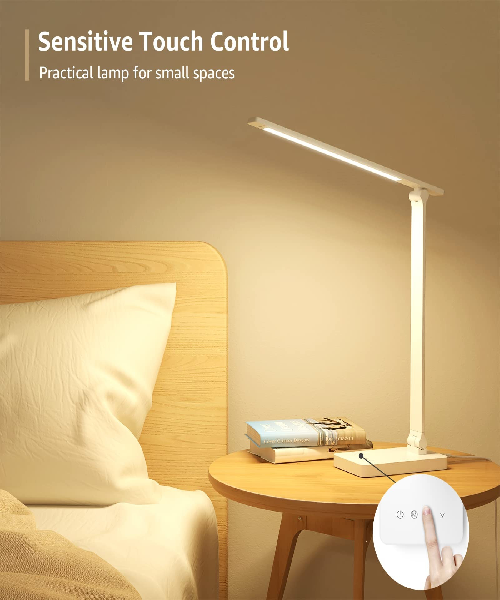
Price: $55-80 | Light Temperature: 3000K (warm) | Adjustable: Yes, dimmer dial
This is what I replaced the terrible lamp with.
A warm-temperature LED lamp (3000K is considered “warm white” as opposed to harsh cool white) with a dimmer gives you the control to adjust light based on the task and time of day. Three hours into afternoon work, you want less brightness. Morning work might want more.
The 3000K color temperature is the key. It doesn’t feel harsh or institutional. It feels like intentional lighting rather than “maximum output.” Your eyes don’t spend all day in overdrive.
What works: dimmable means you can reduce brightness without changing the lamp. Warm white feels comfortable for extended work. The actual light quality is good enough for detail work without being overwhelming. Price is reasonable.
What doesn’t: some dimmers have a noticeable flicker or hum. You have to test the specific model. Also, extremely dimmed down, some LEDs can look slightly orange rather than white. But that’s rarely an issue at reasonable work brightness levels.
Real experience: I dimmed mine to about 70% brightness most of the afternoon. I’m not staring at maximum light all day. My eyes feel better. That’s the whole thing.
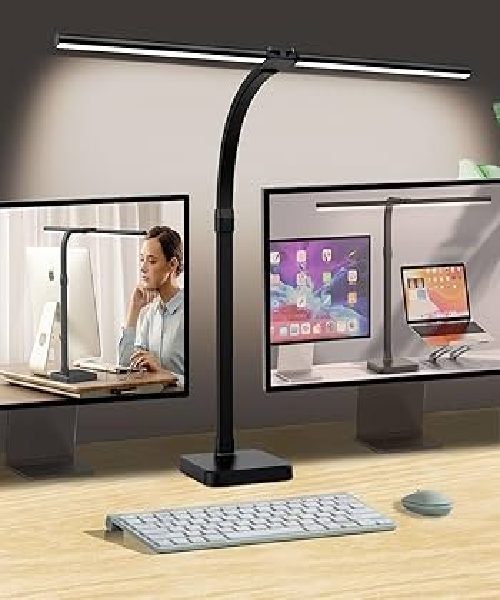
Price: $70-100 | Light Temperature: Warm white option | Adjustable: Height and angle, fixed brightness
If you have a large desk or shared workspace, an arc lamp covers more area with single light source.
Arc lamps throw light across a wider zone than task lamps. They’re also slightly dramatic in a way that makes an office feel less corporate. The desk version is shorter than standard arc lamps, designed specifically for desk height.
What works: even light distribution across a large surface, the arch design means the light comes from above at an angle rather than directly overhead, modern aesthetic, functional and beautiful simultaneously.
What doesn’t: brightness is fixed — no dimming. You’re buying a specific light output. Also, they do take up horizontal desk space even though they’re not on the desk. And if you have a tiny desk, the arch footprint might not fit.
This is what I’d choose if I had more desk space. Instead I’m using the task lamp for my actual desk and secretly envious of my friend who has a large desk with an arc lamp.
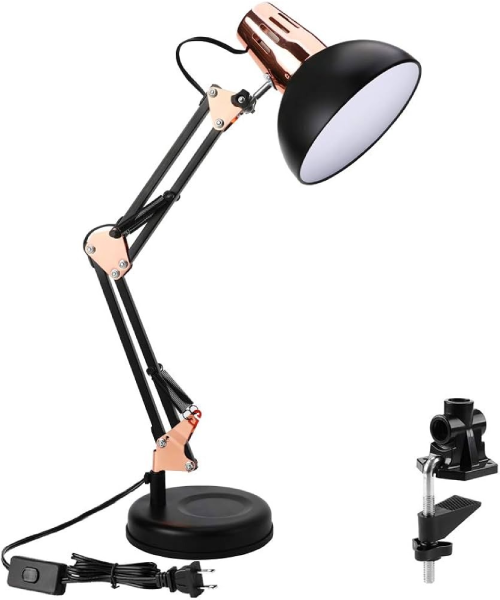
Price: $50-85 | Light Temperature: Varies, some warm options | Adjustable: Yes, arm articulates, some have dimmer
The “I need light to follow where I’m looking” option.
An articulating arm means you can position the light exactly where you need it — directly on a document, to the side of the monitor, above the keyboard. You’re not stuck with one angle.
Some versions are dimmable. Some aren’t. The adjustability is the real feature here — position matters as much as brightness.
What works: the arm means you can adjust the light without moving a heavy lamp. It’s flexible for different tasks. Modern versions look design-forward rather than utilitarian.
What doesn’t: arms sometimes drift down slightly over time if they’re not high-quality. Cheap articulating arms feel exactly like cheap articulating arms. Also, the arm takes up some desk space even when positioned out of the way.
Practical note: This is the lamp for people who move around while working — desk to side surface, different angles throughout the day. The flexibility is the whole point.
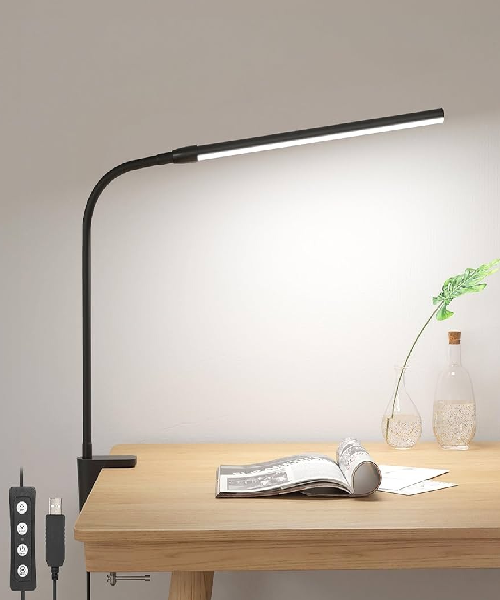
Price: $35-70 | Light Temperature: 3000K warm options available | Adjustable: Clamp position, some have dimmer
The renter and space-saving option.
A clip-on lamp that attaches to a shelf, desk edge, or monitor arm takes up zero desk surface space. You’re not sacrificing work surface for lighting.
Clamp lamps are strong enough to be stable and don’t require any permanent installation. They’re incredibly practical for small home offices where desk space is at a premium.
What works: space-saving, flexible positioning, no permanent installation, affordable, some versions are surprisingly attractive for a utilitarian design.
What doesn’t: it’s hanging off something rather than being a traditional lamp. Some people find that slightly awkward aesthetically. Also, the thing it’s clamped to has to be sturdy enough to hold it or it’ll slowly tilt downward.
This is what I’d recommend if I had a tiny desk or a rented space. The clamping mechanism is surprisingly solid.
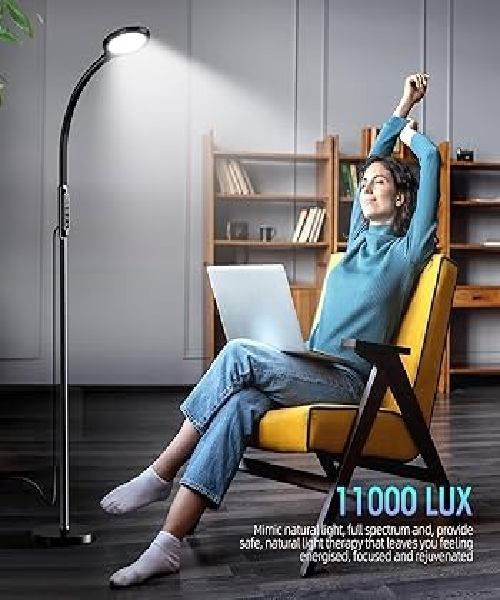
Price: $60-100 | Light Temperature: 4000-6500K adjustable | Adjustable: Yes, temperature adjustable
The “seasonal affective disorder” option or the “I work year-round and need consistency” option.
These lamps can adjust color temperature throughout the day — brighter, cooler light in morning and afternoon (6500K which is near natural daylight), warmer light in evening (3000K). It’s the circadian rhythm approach to lighting.
What works: brightness and color temperature adjustable to match time of day, mimics natural light cycles, some research suggests it helps with mood and productivity, genuinely good quality light.
What doesn’t: they’re the most expensive option and the adjustability is sometimes confusing to use. Also, the research on circadian lighting is still emerging — some people swear by it, others see no difference.
This is a “nice to have” lamp if you’re spending money on your office. Not strictly necessary but potentially beneficial.
What to Check Before Buying
Know your actual light needs. Detail work requires more light than general work. Writing requires different light than video calls. What’s your main task?
Understand color temperature (Kelvin). 2700K = very warm, orange. 3000K = warm white, comfortable. 4000K = neutral. 5000K+ = cool, clinical. Most people prefer 3000K for extended work.
Check the lumens rating, not just “brightness.” Lumens are measured brightness. 200-400 is ambient, 400-800 is task lighting. Know which you actually need.
Test the dimmer function if that matters to you. Some dimmers flicker. Some create a hum. You have to test the specific model.
Consider glare. Direct light on a monitor screen = glare. Indirect or positioned light = no glare. Positioning matters as much as the lamp itself.
Think about your actual work setup. Limited desk space? Clip-on. Large desk? Arc or task lamp. Flexibility needed? Articulating arm. Seasonal issues? Natural light simulator.
Pros & Cons Summary
Lamp Type | Pros | Cons |
LED Task with Dimmer | Adjustable, warm, comfortable, affordable | Some flicker issues, requires testing |
Arc Lamp (Desk) | Covers large area, beautiful, warm options | Fixed brightness, takes floor/space, expensive |
Articulating Arm | Flexible positioning, adjustable angle | Arm drift, requires desk space, variable quality |
Clip-On Lamp | Space-saving, flexible, cheap, no install | Hanging design, depends on sturdy mount |
Natural Light Simulator | Adjustable temperature, research-backed | Most expensive, complex adjustment, debated effectiveness |
FAQs
Is LED better than incandescent for working?
LED is more efficient and doesn’t produce heat, which is good for working hours without temperature issues. But cheap LED can be harsh. Good warm LED is superior to old incandescent.
How bright should a desk lamp actually be?
400-600 lumens is standard task lighting. Less than 300 is too dim for detail work. More than 800 is unnecessary and causes eye strain. Dimmer control lets you adjust within a range.
Should the lamp be on my desk or to the side?
Ideally slightly to the side and above. Direct overhead can create shadows. Direct from the side can create glare. Angled from above and slightly side is usually optimal.
Can I work under a ceiling light instead of a desk lamp?
Technically yes, but it’s not ideal. Ceiling lights create shadows on work surfaces. Desk lamps provide focused light where you actually need it. Combination of both is ideal.
What's the best position for avoiding eye strain?
Light should be directed at the work surface, not the monitor. Monitor light should be dim or angled to avoid glare. Your eyes should feel like they’re working at normal brightness, not squinting or straining.
Final Recommendation
If you work at a desk more than three hours daily: get a proper desk lamp. The budget version I listed (LED task lamp with dimmer) is legitimately worth the investment because it’s good quality at a reasonable price.
If you have extended afternoon work sessions: warm white (3000K) with dimming control. Adjust brightness down in afternoon. Your eyes will thank you around 4pm.
If you have seasonal affective tendencies: consider the adjustable temperature lamp even though it costs more. The color temperature adjustment might actually help.
If you have a tiny desk: clip-on lamp. Saves surface space without sacrificing light quality.
My current setup: warm LED task lamp with dimmer. Cost me $65. It’s the reason I can work at my desk for eight hours without my eyes feeling destroyed. That’s a good return on investment.
The real secret about office lighting is that “bright” doesn’t equal “good.” Good light is comfortable light. Comfortable light adapts to the task and time of day. Good lamps allow that adjustment. Everything else is detail work.