
I bought a power drill because I needed to hang one shelf.
One shelf. That was the entire project. Hang a single shelf on a single wall in my living room. I went to a home improvement store, stood in the tool aisle for thirty minutes, got overwhelmed, and bought a full-size power drill with bits and a carrying case because “I might need it later.”
The drill sat in a closet for eight months. When I finally hung the shelf, I used it for approximately forty-five seconds. It cost $80 and I’ve used it once.
That’s when I realized I’d been thinking about DIY tools wrong. I was imagining myself as someone with a workshop and ongoing projects. I’m actually someone who hangs a shelf occasionally and paints a room every few years.
I spent a week researching what actual small-project people actually need. Not what home improvement marketing says you need. What you actually need to do small projects without wasting money on tools you’ll use once.
What Beginners Actually Need (And What They Don't)
Here’s the honest breakdown: if your DIY projects are hanging shelves, painting walls, minor cabinet fixes, and occasional hole-patching, you need maybe six tools. Maybe seven if you’re ambitious.
You don’t need:
- A full power drill set
- A miter saw
- A table saw
- A nail gun
- A stud finder (okay, you kind of need this, but a cheap one is fine)
- A belt sander
- A chop saw
- Basically anything that requires its own carrying case
You do need:
- A measuring tape
- A level
- A basic drill (or a hand screwdriver set if you’re committed to never using power)
- A screwdriver set
- A paint kit (brush, roller, tray)
- A utility knife
- Basic hardware (nails, screws, anchors)
That’s it. That’s the whole list. Everything else is nice-to-have but not essential for small projects.
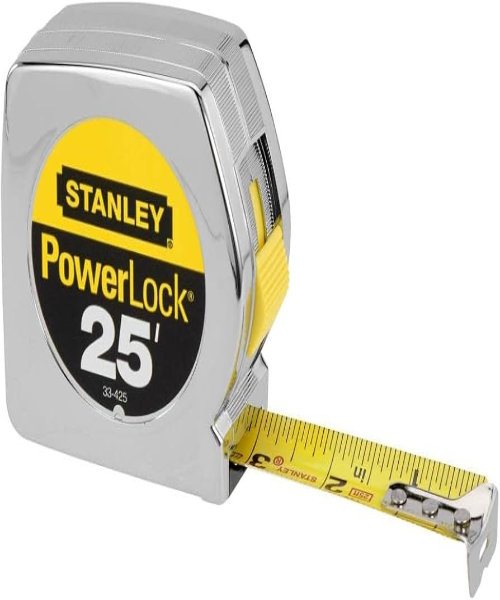
Best for: Every single project | Why you need it: You can’t measure without this | Budget: $8-15 | Better option: $15-25
This is the one tool that’s genuinely non-negotiable.
A measuring tape is how you know if something is actually level, if it fits the space, if you’re measuring the wall correctly, if you’re placing something at the right height. Every single DIY project starts with measuring.
What to look for: 25-foot length handles most home projects. The tape should lock so it doesn’t retract while you’re measuring. The markings should be clear and easy to read.
Budget option: $8-12 for a basic 25-foot tape. It works. It’s plastic. It feels cheap but it functions.
Better option: $15-25 for a tape with a better lock mechanism and more durable housing. You’ll use this constantly so durability matters.
I bought a cheap tape and it works fine. But the locking mechanism is slightly flaky and I have to jiggle it sometimes. The better option would probably be worth it.
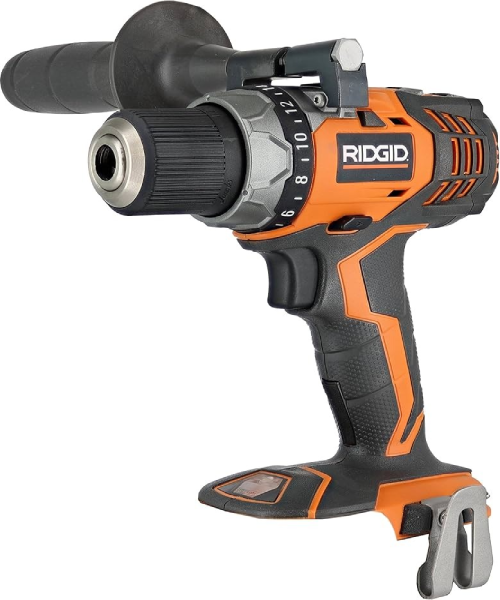
Best for: Hanging shelves, cabinet assembly, small holes | Why you need it: Hand screwing things is exhausting | Budget: $30-50 | Better option: $60-90
The tool I bought for one shelf.
Here’s the thing about drills: you don’t need the fancy one. You need a basic cordless drill that makes holes and drives screws. That’s it. Not a professional-grade impact driver. Not a brushless motor. Just a basic drill.
18-volt is the sweet spot for home projects. Enough power for small work, not so much that it’s heavy or overkill.
What to check: cordless (batteries die but you don’t need a cord trailing everywhere), 18V or less (lighter, adequate power), comes with a charger, has a few basic bits included.
Budget option: $30-50 for a basic cordless drill from a known brand. Limited bit selection, basic battery.
Better option: $60-90 for a drill with better battery quality, more included bits, faster charging, and a second battery.
I’d buy the better option if starting over. That cheap drill I have works but the battery dies at inconvenient times and you can tell it was the budget version.
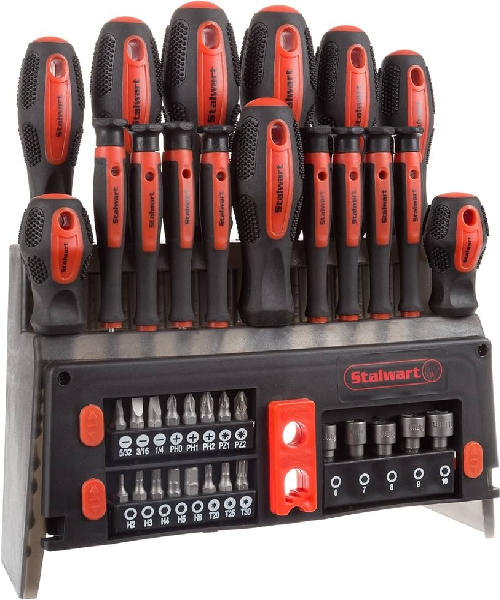
Best for: Cabinet hardware, small fasteners, precision work | Why you need it: Some projects don’t need a drill | Budget: $10-20 | Better option: $25-40
The thing nobody talks about is that not every screw needs a power drill.
Hanging cabinet handles? Hand screwdriver. Adjusting door hinges? Hand screwdriver. Tightening loose hinges? Hand screwdriver. A good hand screwdriver set handles the things that are too small or too precise for a power drill.
What to check: multiple sizes (Phillips, flathead, square drive), comfortable handles, tips that fit snugly in screws without stripping.
Budget option: $10-20 for a basic multi-bit set. Works fine for occasional use.
Better option: $25-40 for a set with better-quality tips and more comfortable handles. If you’re using hand screwdrivers regularly, quality handles matter.
I use hand screwdrivers more often than I expected. Worth getting a decent set.
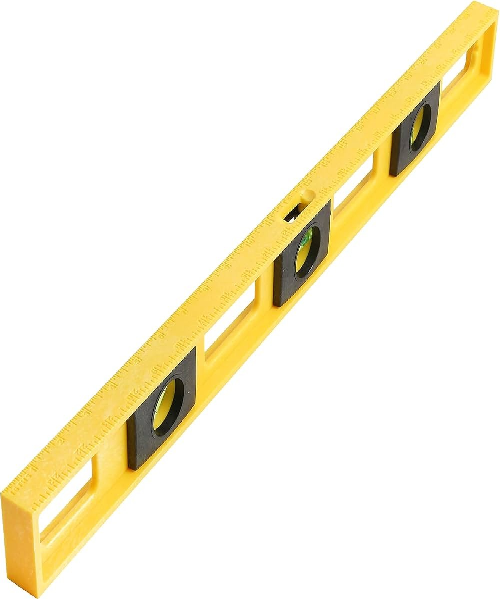
Best for: Hanging shelves, pictures, mirrors, cabinets | Why you need it: “Looks level” and “actually level” are different | Budget: $12-20 | Better option: $25-35
The tool that prevents crooked shelves.
A level tells you if something is actually horizontal or vertical. Sounds simple. Is essential. The difference between a shelf that looks intentional and a shelf that looks like it’s floating into a black hole is a $15 level.
What to check: 24-inch length handles most home projects, bubble vials that are easy to read, not damaged (even small cracks in the tube make it unreliable).
Budget option: $12-20 for a basic aluminum level. Works fine.
Better option: $25-35 for a level with better accuracy and more durable construction. You’re using this for straight lines so accuracy actually matters.
I’ve used my level dozens of times since I started taking DIY seriously. Spent $18 on it and it’s been worth every penny.
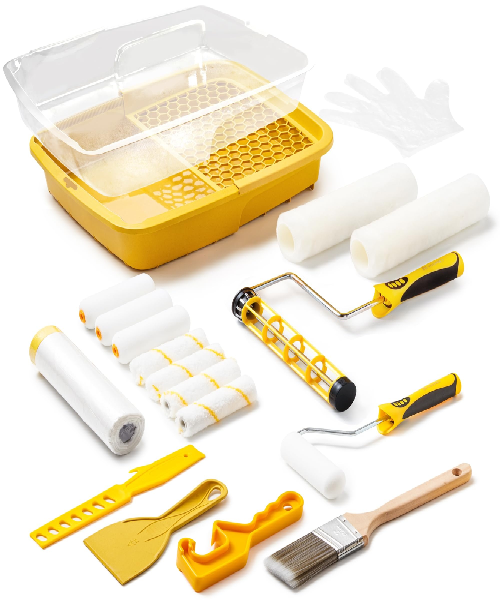
Best for: Painting walls, trim, small surfaces | Why you need it: Painting without good tools looks like painting without good tools | Budget: $20-35 | Better option: $40-60
Quality brushes and rollers make an enormous difference in paint results.
A cheap brush leaves bristles in the paint and doesn’t apply evenly. A quality brush applies smoothly and the bristles stay where they’re supposed to. Same with rollers. Cheap rollers shed. Quality rollers don’t.
What to check: natural bristles for oil-based paint, synthetic bristles for latex/acrylic paint, roller with correct nap for your wall texture.
Budget option: $20-35 for a basic brush and roller set. Works, but you’ll notice the difference.
Better option: $40-60 for quality brushes and rollers. Painting is one of the most visible DIY projects so tool quality really shows.
This is where I’d splurge. Bad painting shows. Good painting hides. Spend money on good brushes.
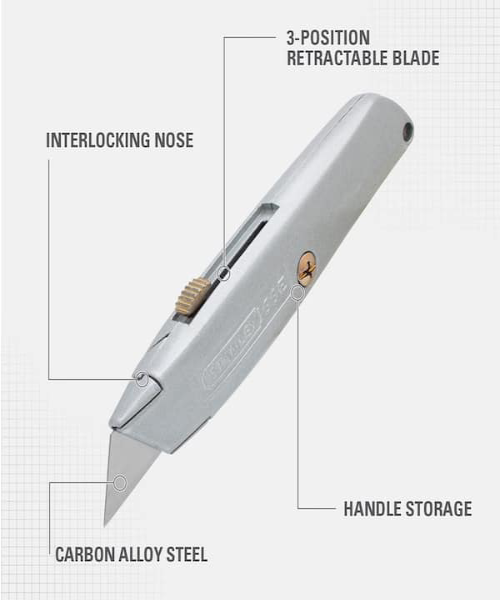
Best for: Opening packages, cutting drywall, trimming, general cutting | Why you need it: You need a sharp blade for lots of tasks | Budget: $8-15 | Better option: $15-25
The most underestimated tool.
A utility knife handles cutting drywall for patches, trimming vinyl, opening packages, cutting insulation, and a hundred small tasks. You use it constantly once you have one.
What to check: retractable blade (for safety), durable handle, includes extra blades.
Budget option: $8-12 for a basic plastic utility knife. Works, feels cheap.
Better option: $15-25 for a metal or high-quality plastic knife with better blade retention.
I bought a cheap one and it works but the blade holder is slightly loose. Better option would probably last longer.
Budget Kit vs Premium Kit
Budget Kit ($80-120 total):
- Measuring tape ($12)
- Basic cordless drill ($45)
- Hand screwdriver set ($15)
- Budget level ($15)
- Paint kit ($20)
- Utility knife ($10)
This handles small projects. Mostly works. You’ll get frustrated occasionally with tool quality but you’re done with DIY.
Better Kit ($150-200 total):
- Quality measuring tape ($20)
- Better cordless drill ($75)
- Quality screwdriver set ($30)
- Good level ($30)
- Quality paint kit ($50)
- Better utility knife ($20)
This feels like you’re using actual tools. Quality matters on the ones you use frequently (measuring tape, level, brush, drill).
My recommendation: start with the budget kit. If you find yourself doing more projects, upgrade specific tools rather than buying a whole new set.
Common Buying Mistakes to Avoid
Buying a full tool set because “you’ll need it eventually.” You won’t. You’ll use 6-7 tools constantly and 40 tools never. Buy what you need now.
Thinking cheap tools cost less. Cheap tools cost more in frustration and redoing projects. Medium-quality tools are worth the extra money.
Buying power tools without knowing you need them. That cordless drill seemed essential until I realized I only need it occasionally. A hand screwdriver set might have been enough for my needs.
Forgetting about fasteners. You need nails, screws, and wall anchors. These are cheap and essential. Don’t skip them.
Buying name-brand over function. You don’t need brand names. You need tools that work. Mid-tier brands are usually better value than budget or premium.
FAQs
Can I use hand screwdrivers for all projects instead of a power drill?
For small projects, yes. But a power drill saves enormous time and effort. For one shelf it’s optional. For multiple projects it’s essential.
Do I need a stud finder?
For hanging shelves on studs, yes. A cheap one ($15-20) works fine. You’re just finding wood behind drywall, not doing precision work.
What about a hammer? Why isn't it on this list?
You can do small projects without nails. If you need a hammer, a $10 basic one is fine. Not essential for most modern DIY.
Is a drill-driver combo worth it or should I buy separately?
Start with a basic cordless drill. If you need a separate driver later, buy it then. Most small projects only need a drill.
Should I buy expensive drill bits right away?
No. Start with the basic bits that come with the drill. Buy specialty bits when you need them.
Final Recommendation
If you’re hanging one shelf or painting one room: buy the budget kit. You’ll spend $80-120 and have everything you need.
If you think you’ll do multiple projects: invest in the better kit. Quality tools make the work easier and the results look better.
Don’t buy a tool because you think you should own it. Buy tools because you have a specific project that needs them.
My $80 drill that I used once taught me a valuable lesson: starting with what you actually need is smarter than starting with what you might someday need.
The irony is that after learning this, I’ve done enough projects that I actually use all six of these tools regularly. But I learned that through doing projects, not by buying a full workshop upfront.