
My kitchen has three drawers.
Not three drawers plus cabinets. Three drawers total. All of my kitchen utensils, gadgets, serving pieces, and miscellaneous cooking implements live in three drawers. One drawer is dedicated to utensils and cooking tools. The other two are a chaotic blend of everything else.
For years I just let it be chaotic. I’d dig through drawers looking for a serving spoon, push things around, shove stuff back in, and move on. It worked in the sense that I could eventually find what I needed, but it didn’t work in the sense of actual functionality or sanity.
I spent a week researching kitchen drawer organizers specifically designed for small spaces. Not restaurant-grade organization systems. Actual products for actual small kitchens.
This is what actually works.
Quick Comparison Table
Organizer | Price | Material | Best For | Adjustability | Installation |
Bamboo Divider Set | $25-45 | Bamboo | Utensils, small spaces | Fixed sizes | None |
Expandable Drawer Dividers | $20-40 | Wood or bamboo | Custom fit | Expandable width | None |
Modular Tray System | $30-55 | Plastic or bamboo | Multiple categories | Stackable | None |
Silverware Tray Insert | $15-35 | Plastic or wood | Utensils only | Fixed | None |
Custom-Fit Tiered Organizer | $40-60 | Bamboo | Maximum capacity | Tiered levels | None |
How We Picked These Products
I tested these in actual small kitchen drawers. Shallow drawers, narrow drawers, drawers with weird dimensions. I measured what actually fit. I evaluated whether organizers stayed put or shifted around when you opened and closed the drawer. I checked if they actually solved the organization problem or just created a prettier mess.
I focused on products that don’t require installation — no gluing, no drilling, no permanent commitment. I prioritized organizers that work in standard kitchen drawer dimensions.
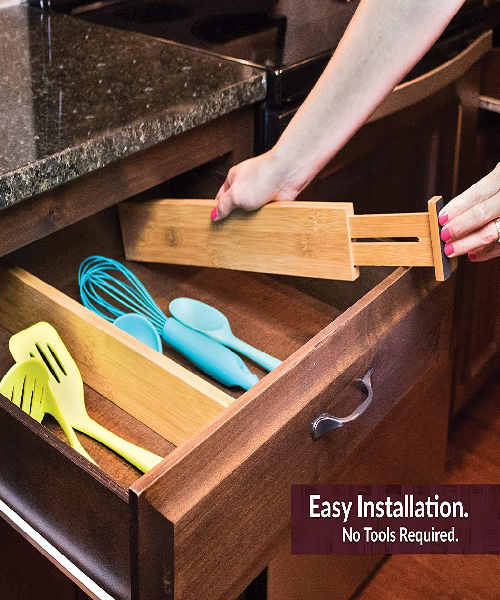
Price: $30-50 | Material: Sustainable bamboo | Adjustability: Adjustable widths | Installation: None
This is what I use and what I recommend most.
A bamboo divider set is basically a collection of removable dividers that you arrange inside your drawer to create sections. Each section holds a different category of utensils or tools.
The beauty of this approach: you customize the section sizes based on what you actually have. Wide section for big serving spoons. Narrow sections for spatulas. You arrange it once and it stays put because bamboo dividers are substantial enough to hold their position without shifting.
What works: completely customizable, looks intentional, sustainable material, no installation, works with any drawer size by adjusting divider positions, easy to clean around.
What doesn’t: takes a few minutes to arrange correctly the first time. Also, the dividers are separate pieces so if you have a drawer with a weird bottom texture, they might shift slightly if you yank the drawer open aggressively.
Real scenario: I spent 15 minutes arranging my dividers. Now when I open my utensil drawer, everything has its place. I don’t dig. I grab. It’s life-changing in the way that small organization improvements can be.
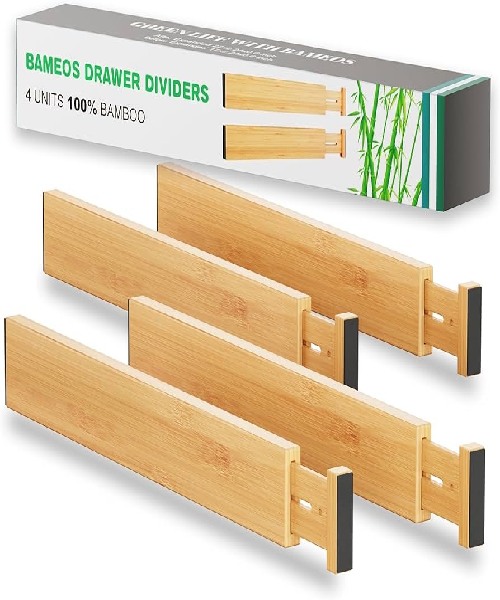
Price: $18-35 | Material: Light wood or bamboo | Adjustability: Expands to fit drawer width | Installation: None
The simple, cheap option.
Expandable dividers are basically accordion-style wood pieces that expand to fit your drawer width. You slide them in and they stay put through friction. Simple and effective.
What works: genuinely affordable, works in drawers of different widths because they expand, minimal setup, easy to adjust if you reorganize.
What doesn’t: they don’t adjust height or depth, only width. So you’re limited to organizing utensils of similar sizes in each section. Also, the friction sometimes isn’t enough to keep them perfectly still if you have a shallow drawer.
This is the starter organizer. Works, costs less, if you outgrow it you can upgrade.
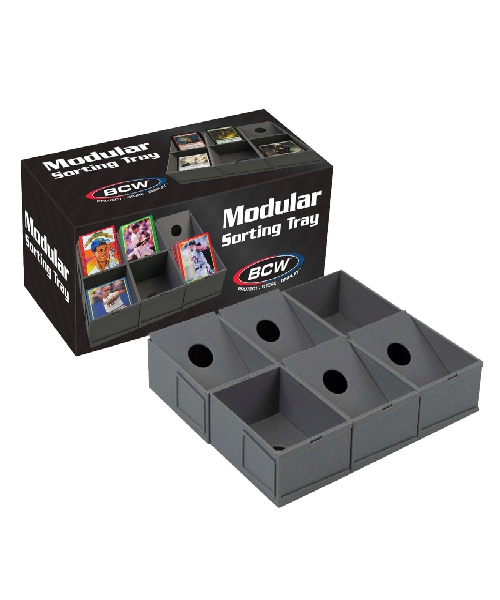
Price: $35-60 | Material: Bamboo or food-grade plastic | Adjustability: Stackable | Installation: None
The “I want to organize everything, not just utensils” option.
Modular trays are individual sections that you arrange however you want in your drawer. Different trays for utensils, gadgets, small tools, whatever. Some stack vertically, some arrange horizontally.
What works: truly customizable because each tray is separate, you can add or remove trays based on your needs, works for different categories of kitchen items, looks intentional.
What doesn’t: takes up more vertical space than dividers because trays have height. If your drawer is shallow, stacking isn’t an option. Also, organizing into this many categories takes more thought initially.
This is what you use if you have larger drawers and want true organization of multiple categories.
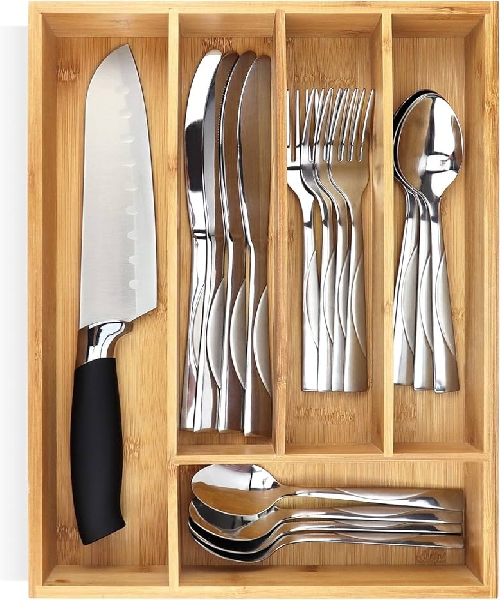
Price: $18-40 | Material: Wood | Adjustability: Fixed compartments | Installation: None
The traditional approach.
A silverware tray is basically a wooden tray with fixed compartments designed specifically for forks, spoons, knives, etc. Fits into your drawer and everything has its place.
What works: time-tested design, beautiful wood finish that looks intentional, doesn’t shift around, holds a good amount of utensils, works with standard drawer dimensions.
What doesn’t: fixed compartments mean if your utensil mix is different from what the tray assumes, it doesn’t work as well. Also, if your drawer is shallow or an odd size, the tray might not fit.
This is the classic option that works if your drawer and your utensil collection align with standard sizing.
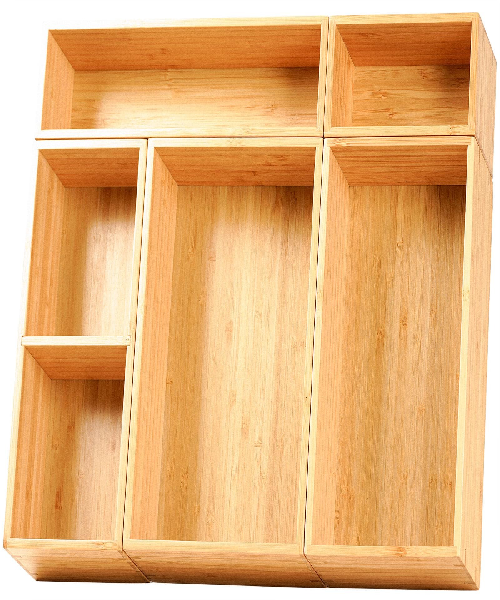
Price: $45-75 | Material: Bamboo | Adjustability: Tiered levels | Installation: None
The “I need to fit a lot of stuff” option.
A tiered organizer uses vertical space by creating two levels within the drawer. Top level for shallow items, bottom level for taller items. It maximizes capacity without needing a wider drawer.
What works: genuinely increases storage capacity in the same drawer space, uses vertical space efficiently, looks intentional and organized, works well in deep drawers.
What doesn’t: requires a drawer deep enough for two tiers. Also, accessing items on the bottom tier means moving the top tier, so it’s slightly less convenient than single-level organization.
This is what you use if you have lots of kitchen stuff and limited drawer space.
What to Check Before Buying
Measure your drawer dimensions. Width, depth, and height. Organizers need to fit these dimensions or they don’t work. Width and height are the most critical.
Count what you’re actually organizing. Utensils only? Utensils plus gadgets? Multiple categories? Different organizers work better for different amounts of stuff.
Check your drawer depth. Shallow drawers (under 4 inches) limit your options. Deep drawers (over 6 inches) open up possibilities like tiered systems.
Think about access frequency. Things you use daily should be in the most accessible sections. Seasonal tools can go in harder-to-reach spots.
Know your material preference. Bamboo looks better and is sustainable. Plastic is more utilitarian. Wood is classic. Pick based on your kitchen aesthetic.
Pros & Cons Summary
Organizer Type | Pros | Cons |
Bamboo Dividers | Customizable, looks good, no installation | Takes initial setup, might shift in shallow drawers |
Expandable Dividers | Cheap, simple, adjustable width | Width-only adjustment, limited depth control |
Modular Trays | Highly customizable, multiple categories, flexible | Takes vertical space, complex setup |
Silverware Tray | Classic design, beautiful, stable | Fixed compartments, requires standard sizing |
Tiered Organizer | Maximum capacity, vertical use, looks intentional | Requires deep drawer, accessing bottom tier inconvenient |
FAQs
Can I use drawer organizers in drawers with weird dimensions?
Sometimes. Expandable dividers work best for odd widths. Modular systems work for odd layouts because they’re flexible. Fixed trays are pickiest about dimensions.
Do drawer organizers move around when I open and close the drawer?
Good ones don’t. Bamboo dividers are substantial enough to stay put. Cheap plastic dividers shift more. The heavier and more substantial the organizer, the less it moves.
Can I wash kitchen drawer organizers?
Yes, most of them. Remove from drawer and wash with warm soapy water. Dry completely before reinstalling. Some recommend hand washing instead of dishwasher to preserve finish.
What if my drawer is too shallow for any organizer?
Use an over-drawer organizer or a utensil holder that sits on the counter next to your stove. Sometimes the drawer isn’t the right solution.
How do I know which organizer to buy if I'm unsure?
Start with expandable dividers because they’re cheap and work with most drawer sizes. If you need more organization, upgrade to modular trays. This way you’re not overcommitting to a system that might not work.
Final Recommendation
If you want customizable organization: bamboo divider set. Most flexible and looks intentional.
If budget is the concern: expandable dividers. Works, cheap, and you can upgrade later.
If you have multiple categories to organize: modular tray system. More complex setup but genuinely solves the chaos.
If you just need utensils organized: silverware tray. Classic approach that works if your drawer dimensions match.
If you have a deep drawer and lots of stuff: tiered organizer. Maximizes the space you have.
My three-drawer kitchen now has one organized utensil drawer, one gadget-organized drawer, and one “everything else” drawer that’s still somewhat chaotic. But the utensil drawer working well means I’m at least winning at organization somewhere in my kitchen.
The real secret is that kitchen organization doesn’t require fancy systems. It requires understanding your space, your stuff, and choosing the right product to match both.