
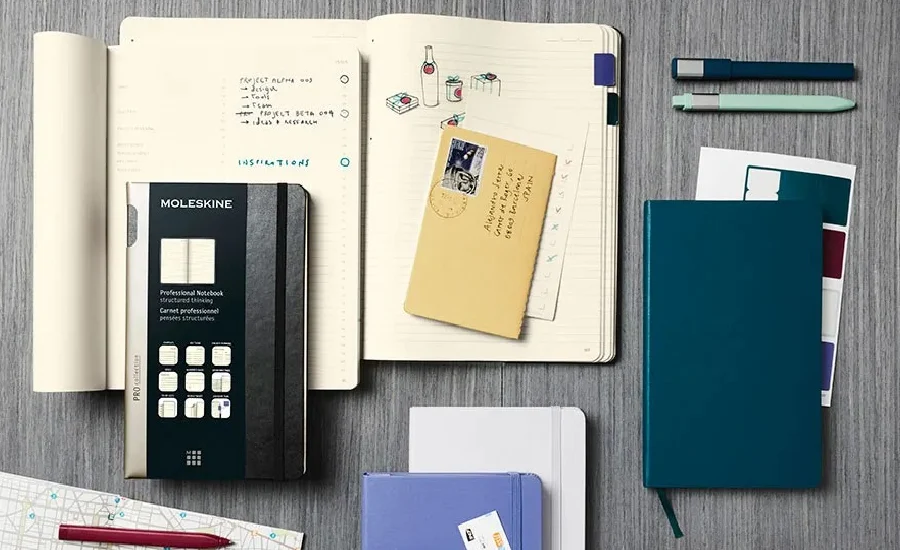
I spent two hundred euros on a productivity system once.
Like an actual system. A notebook that cost forty euros. Colored pens that cost thirty euros. Special stickers and tabs. An app subscription. A course on how to use the system.
The whole thing was two hundred euros.
The guy selling it was incredibly charismatic about how his system would transform my productivity.
I was convinced. I was going to organize my work. I was going to be productive. I was going to be the kind of person who had their life together.
I went home and set up the entire system.
I had the notebook. I labeled sections. I installed the app. I watched the training videos.
I used it for exactly five days.
Then I realized the system was more complex than my actual work.
I was spending more time organizing my to-do list and maintaining the system than actually doing my work.
It took me an hour every morning to fill out all the sections and review all the trackers.
My actual work was suffering because I was doing the productivity system instead of doing the work.
So I went back to my old method: writing things down on random pieces of paper when I needed to remember them.
And somehow I still got the work done.
Turns out the fancy system wasn’t making me more productive. It was making me busier with maintaining the system.
That’s when I realized productivity products aren’t about having the perfect system.
They’re about removing friction from the work you’re already doing.
What Actually Makes a Productivity Product Work
A productivity product removes friction from something you already do.
Not something you want to do. Something you already do.
Like if you’re already writing things down, a better notebook that feels nicer to write in removes friction from that existing behavior.
A productivity product doesn’t require learning a whole new system or changing your fundamental workflow.
Like if you currently track work in your email because that’s what you check constantly, switching to a new productivity app requires:
- Learning how to use the new app
- Changing your habit of checking email
- Remembering to check the new app
- Transferring all your information
That’s friction, not less friction.
A productivity product is something you naturally reach for without thinking.
Like your phone. You use it constantly without thinking about it. You don’t have to remember to use your phone. It’s just natural.
A good productivity product feels like that. Natural. Automatic. Something you reach for without thinking.
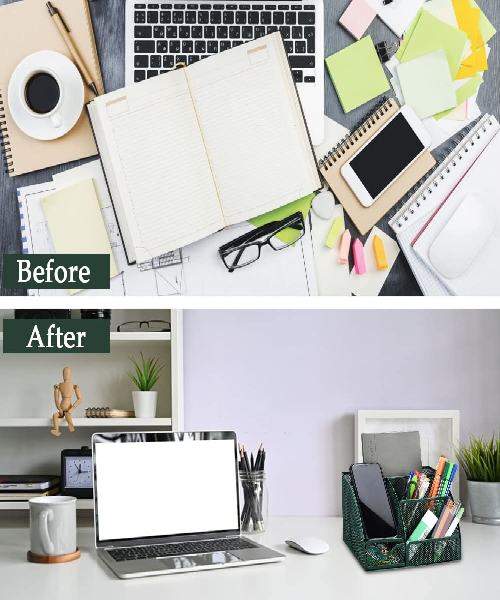
I had a genuinely messy desk.
Not aesthetically messy in a creative way. Functionally messy.
Papers everywhere. Pens everywhere. Stuff everywhere.
I couldn’t find anything when I needed it.
I’d spend five minutes looking for a pen. Ten minutes looking for a document I needed.
It was inefficient.
A simple desk organizer changed this. Not a fancy one. A basic wire organizer that holds papers vertically.
Now papers are organized by type. I can see what I have. I can find things.
This only works if you’re someone who has a genuinely messy desk. If your desk is naturally organized or you work with minimal items, you don’t need this.
A good desk organizer needs to:
Hold the actual stuff you have. Not aspirational stuff. Real stuff.
If you have twelve pens, the organizer needs to hold twelve pens. Not twenty.
If you have three types of papers you keep, the organizer needs sections for three types. Not five.
Be something you don't mind looking at every day.
You’re going to see this constantly. If it looks terrible, you won’t use it.
Be easy to maintain.
If organizing it requires effort, you won’t maintain it.
A simple organizer that you can throw stuff into and it stays organized is better than a complex system that requires perfect placement.
Cost: €15-40 for something decent. You don’t need to spend more.
I work in an open office.
It’s loud constantly.
People talking. Phones ringing. Notifications. Everything.
My ability to focus was terrible because my brain was constantly picking up on every sound.
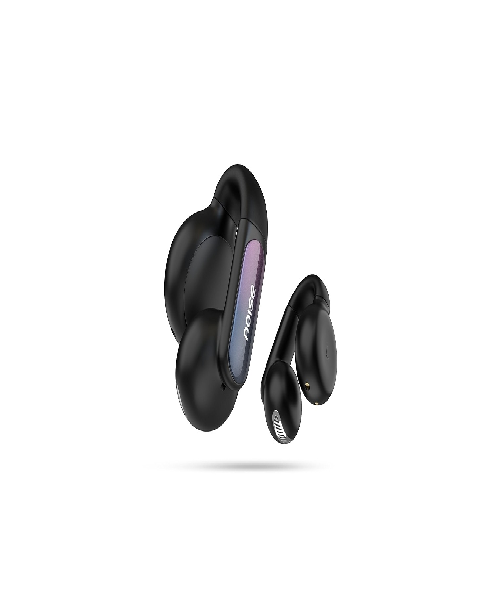
Noise-canceling earbuds changed this.
I can put them in, play white noise or ambient sound, and suddenly I can focus.
But this only works if you work around noise that bothers you.
If you work in a quiet space or noise doesn’t bother you, earbuds are useless.
A good noise-canceling earbud needs to:
Actually block noise. Not all noise-canceling is equal.
Some earbuds reduce noise by fifty percent. Some by eighty percent. Some are worse.
Test them if possible. See if they actually block the noise you’re around.
Be comfortable to wear for hours.
Some earbud designs hurt your ears after two hours. Some are fine for eight hours.
If they hurt, you won’t wear them.
Have good battery life so you don't worry about them dying mid-day.
If you have to charge them constantly, they’re annoying to use.
Sound decent if you're listening to music or ambient sound.
Some cheap noise-canceling earbuds have terrible sound quality. The noise-canceling works but the audio is bad.
Cost: Budget earbuds are €30-60 but quality varies wildly. Good ones are €100-300.
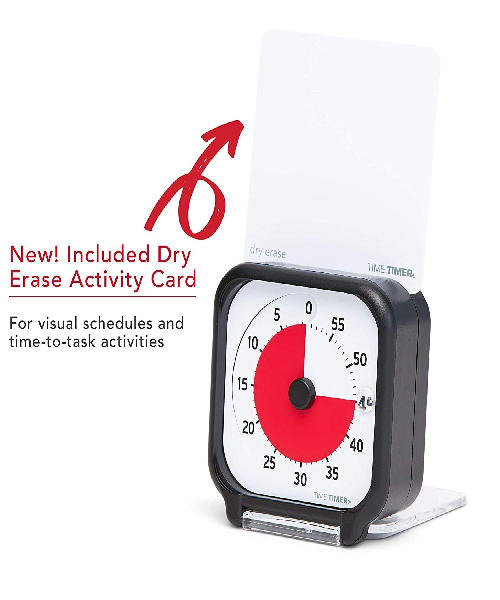
I use a physical timer constantly.
Like a cheap kitchen timer that costs five euros.
I set it for work blocks. Twenty-five minutes of focus work. Then a break.
This works because it’s physical. I have to look at it. I can’t ignore it like a notification on my phone that I swipe away.
When the timer goes off, it’s an actual sound. I can’t miss it.
This system only works if you’re someone who actually respects timers.
Some people set a timer and still work past it. For those people, a timer doesn’t help.
But if you’re someone who respects external deadlines, a visible timer is powerful.
A good timer needs to:
Be visible on your desk. You have to actually see it counting down.
A timer you can’t see is useless because you forget it’s running.
Make a sound you actually notice when it goes off.
Some timers are too quiet. You ignore them.
Be simple to use. No complicated buttons.
If setting the timer requires five steps, you won’t use it.
Be something you don't mind hearing go off multiple times a day.
If the sound is annoying, you’ll stop using it.
Cost: €5-15. Seriously. You don’t need to spend more than this.

I have a writing pad on my desk.
When I have an idea or need to remember something, I write it down immediately.
Then I transfer it to my system later.
The writing pad is just the capture tool.
This works because writing by hand is faster than typing for capturing ideas.
By the time you open your phone or computer, you’ve forgotten the idea.
But if you’re someone who prefers typing or uses your phone constantly anyway, this doesn’t work for you.
A good writing pad needs to:
Be on your desk right next to you. Visible. Accessible.
If your writing pad is in a drawer, you won’t use it because you’ll forget it exists.
Have paper you don't mind writing on.
If the paper is scratchy or bad, you won’t write on it.
Be something you don't mind having out visibly.
You’re going to see it all day and people might see it. If you care about that, it matters.
Allow you to easily reference what you wrote.
Some people flip through pages. Some people tear pages out. Have a system that works for you.
Cost: €5-20. You’re literally just buying a notebook.
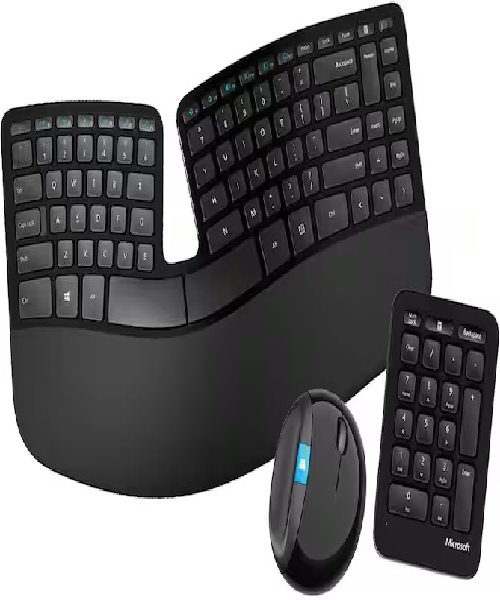
I type constantly.
Like eight hours a day.
A regular keyboard started hurting my wrists after a few months.
An ergonomic keyboard fixed this pain.
But if you only type for two hours a day, this doesn’t matter. Your wrists won’t hurt.
A good ergonomic keyboard needs to:
Actually reduce your wrist pain. This is specific to your hands.
Some people’s hands fit ergonomic keyboards perfectly. Some people’s hands don’t.
You have to test it if possible.
Have a good feel to the keys.
Some keyboards feel cheap and mushy. Some feel good.
If the keyboard doesn’t feel good to type on, you’ll dislike using it.
Be something you don't mind looking at on your desk.
Ergonomic keyboards are often weird-shaped. If it looks terrible on your desk, you might not use it.
Be stable and not tip or slide.
If the keyboard is unstable, it’s annoying to type on.
Cost: €50-150 for a decent one. Budget ergonomic keyboards are hit or miss.
Budget vs Premium Productivity Products
Budget: Most productivity products work fine at budget price.
A €5 timer works as well as a €30 fancy timer.
A €10 basic notebook works as well as a €40 designer notebook for writing ideas.
A basic €30 organizer works as well as a €100 designer organizer.
Premium: Only buy premium if you use the product constantly and quality genuinely affects your experience.
If you type eight hours a day and have wrist pain, a premium ergonomic keyboard at €150 is worth it because you use it constantly and your wrists will hurt less.
If you work in a noisy office and noise-canceling is critical for focus, premium earbuds at €250 might be worth it because you use them all day.
What Not to Buy
Don’t buy productivity products based on aesthetics or social media recommendations.
Don’t buy productivity systems that are more complex than your actual work.
Don’t buy apps you’re not going to use consistently.
Don’t buy products that require changing your fundamental workflow.
Don’t buy multiples of something if one works fine.
Final Recommendation
A good productivity product removes friction from work you’re already doing.
It doesn’t change your behavior. It supports your behavior.
Before you buy anything, ask:
Do I actually have this problem right now?
Will this product remove that friction without adding more friction from maintaining it?
Will I actually use this consistently, or will it look good and end up unused?
The best productivity products are the ones you don’t think about. You just use them naturally. They’re so integrated into your work that they’re invisible.